

Microwave Oven Repair Dubai: Your Complete Fix Guide

You press start, wait two minutes, pull out your food and it’s stone cold. Or nothing happens at all when you press the button, no hum, no light, nothing. My first thought is usually “great, now I need a new microwave.” Most of the time though, that’s not actually true. I run Al Siraj Electronics Repairing, and we’ve been doing microwave oven repair Dubai wide for well over ten years at this point. Honestly, after this many years, the calls start sounding the same after a while. It’s almost always one part failing, not the whole unit giving up. Doesn’t matter if it’s a small countertop microwave in someone’s flat or a commercial one that’s been running non-stop in a restaurant kitchen all day, the pattern repeats. We usually get a technician to you the same day, look at the actual unit before quoting anything (not over the phone based on a description) and back whatever we fix with a 3-month warranty. That’s the short version if you’re just looking to get it sorted quickly. If you want the longer version, where I actually explain what’s probably wrong, keep going. What’s Probably Wrong With Yours The magnetron is the usual suspect, and by a wide margin honestly. This part is what actually generates the heat inside the unit, and because it’s working every single time you use the microwave, it’s also the first thing that wears out. When it fails, everything else still looks normal, the fan’s running, the turntable’s spinning, the light’s on inside, but your food comes out exactly as cold as it went in. Threw me off the first time I saw it years ago too, but it’s a very recognizable pattern once you’ve seen it a few times. If the turntable isn’t turning, that’s usually something separate entirely, either the motor underneath has worn out, or the plastic ring that supports it has slipped out of place. Small, cheap fix most of the time. A door switch that’s stopped working properly is one of those faults people don’t expect. The microwave literally can’t tell if the door’s shut, so it just won’t start no matter what you do. I’ve had people convinced their whole unit died over this exact switch. Control panel not responding, buttons doing nothing, or the screen just staying blank, that’s almost always a wiring problem or the control board itself giving out. Not something worth messing with yourself. A blown fuse cuts power to the entire unit, and usually there’s a short happening somewhere else that caused it, the fuse itself rarely fails on its own for no reason. Now, if you’re seeing sparking inside the cavity, stop right there. Turn it off and don’t run it again until someone’s actually looked at it. Usually it’s a damaged waveguide cover, sometimes it’s just a stray bit of metal debris that’s ended up inside somehow. Either way, running it longer just makes whatever’s wrong worse. Overheating shutdown, where it just cuts off in the middle of use, usually means the cooling fan’s struggling, or the vents are blocked somewhere. It’s basically the unit protecting itself before anything worse happens. Read More: Dryer Repair Dubai Marina: Everything You Need to Know Why I Test the Magnetron Instead of Just Swapping It Here’s something a lot of repair guys skip, and it costs people money unnecessarily. The second someone says “it’s not heating” a lot of technicians just replace the magnetron without checking anything else. The problem is, sometimes it’s actually a failed diode affecting power output, not the magnetron itself, and now you’ve paid for a part you didn’t need. I test it properly first. Same goes for the door switch, I actually check it’s engaging correctly rather than assuming and swapping blind. And it’s always genuine parts, not the cheap knockoffs that die again in a month right when you’re not expecting it. Mistakes People Make Trying to Fix It Themselves I get it, YouTube makes it look easy. But there’s a reason technicians who work on microwaves specifically go through training before touching the inside of one. The biggest mistake is opening the casing thinking “it’s unplugged, it’s safe.” It’s not. There’s a high-voltage capacitor inside that can hold a charge for a good while even after the unit’s been switched off and unplugged. People have genuinely gotten hurt assuming otherwise. Another common one, people replace the fuse without figuring out why it blew in the first place. It blows again within a day or two, and now they think the new fuse was faulty when really there’s a short somewhere else causing it. And this one comes up more than you’d think, people keep using a microwave that’s sparking because “it still works fine otherwise.” That sparking is actual arcing happening inside, and it damages the cavity walls the longer it continues. What starts as a cheap waveguide cover replacement can turn into a much bigger repair if it’s left running. How Long a Repair Actually Takes People assume booking a technician means losing half a day, but that’s rarely the reality. Once we’ve confirmed what’s wrong, a door switch or fuse replacement takes maybe fifteen to twenty minutes. A magnetron swap runs a bit longer, closer to forty-five minutes to an hour, mostly because of the time it takes to safely discharge the capacitor first before touching anything. The actual diagnosis is usually the fastest part, five to ten minutes of proper testing tells us most of what we need. What takes the time is doing it correctly instead of rushing through it, which is also why we won’t promise a fixed time slot before actually seeing the unit in person. Home Use vs What Restaurants Deal With A microwave going down at home for an afternoon is annoying, sure, but you manage. A commercial microwave repair call from a restaurant kitchen mid-lunch-rush is a completely different level of pressure, orders back up within minutes. So those jobs get
Washing Machine Repair Dubai – Expert, Affordable & Same-Day Service

If your washing machine stopped mid cycle or won’t spin at all the fastest fix is usually one of three things. Power supply. Drainage blockage. Or a worn belt. Most washing machine repair dubai calls start with one of these three problems and a trained technician can spot the real cause within minutes of arriving. Living in Dubai means your washing machine works overtime. Between sandy laundry from beach days and heavy household loads the machine takes a beating that most manufacturers never designed for in the first place. So when it breaks down you need answers fast, not a guessing game. This guide walks through the most common washing machine problems homes across Dubai deal with. Why do they happen. What you can check yourself before calling anyone. And when it’s time to bring in a washing machine technician dubai residents already trust. Why Washing Machines Break Down So Often In Dubai A washing machine gets a lot of use in a busy Dubai home. Over time, hard water can leave mineral deposits inside the machine while dust and heat can add to normal wear. Small issues can then turn into problems with spinning, draining, or washing properly. If your washer has started acting differently, getting it checked early can save you from a bigger repair later. A local washing machine repair dubai service can find the faulty part and fix it without replacing the whole appliance in many cases Simple things like cleaning the filter and using a suitable descaler from time to time can also help keep the machine in good working condition Washing Machine Not Spinning: What It’s Really Telling You A washing machine that won’t spin is one of the most common calls a washing machine repair dubai technician receives. There are usually four causes behind this. An unbalanced load shifting the drum A broken or slipped drive belt A faulty lid switch stopping the spin cycle from starting A worn out motor coupling Before calling anyone open the machine and check if clothes are bunched to one side. Rebalance the load and try again. If the problem continues the belt or motor coupling likely needs replacing. This isn’t something to force through repeatedly because running a machine with a slipping belt can damage the motor itself and turn a small fix into an expensive one. Washing Machine Not Draining Water: The Real Fix Standing water at the end of a cycle points to a blocked drain pump filter or a kinked drain hose. This is one of the easiest problems to diagnose but one of the messiest to fix without the right tools. Here’s what usually causes it. Lint coins and small fabric items trapped in the pump filter A drain hose bent or crushed behind the machine A failing drain pump motor A clogged drainage line connected to the wall Most homeowners can clear a simple filter blockage themselves. But if water keeps pooling after cleaning the filter the pump itself may have burned out and that requires a proper washing machine drainage repair with a replacement part matched to your machine’s model. Strange Noises Coming From Your Washing Machine A grinding banging or squealing washing machine is trying to tell you something is loose or worn. Ignoring it almost always leads to a bigger repair bill later. Common noise culprits include: Worn drum bearings causing a grinding sound during spin Loose drum paddles knocking against the tub A foreign object like a coin or button stuck between the drum and outer tub Motor mounts that have degraded over time Bearings in particular are a job best left to a certified technician. Replacing them requires opening the drum assembly completely and getting it wrong can throw the whole machine off balance permanently. Washing Machine Leaking Water: Where To Look First A leak rarely means the whole machine is failing. It’s usually one specific part letting water escape. Check these spots first. The door seal on front load machines for cracks or trapped debris Hose connections at the back for loose fittings The detergent dispenser for overflow from using too much soap The tub seal which wears down after years of use Front load washing machine problems often trace back to the door seal since it takes the most wear from daily opening and closing. Top load machines usually leak from the inlet valve or tub seal instead. When To Call A Professional Instead Of DIY There’s a clear line between what you can fix yourself and what needs a trained hand. Basic filter cleaning, rebalancing a load or checking a power outlet is safe to handle on your own. But anything involving the motor drum assembly circuit board or drain pump replacement should go to a certified technician. Opening these components without the right tools risks damaging parts that were otherwise fine and voiding any warranty the machine still has. If your machine shows an error code refuses to power on completely or the drum won’t rotate at all it’s time to book a same day washing machine repair rather than attempting a fix that could make things worse. Washing Machine Repair Cost In Dubai Pricing depends on what’s actually wrong. A simple filter clean or hose replacement costs far less than a motor or control board swap. Most reputable companies charge a small inspection fee that gets applied toward the final repair cost once you approve the work. Watch out for anyone quoting a price before even seeing the machine. Honest washing machine repair cost dubai estimates come after a proper inspection not a phone guess. This protects you from surprise charges once the technician is already at your door. Genuine spare parts also affect pricing. Cheaper aftermarket parts might seem like a bargain upfront but they fail faster and often cost more in repeat repairs down the line. Choosing The Right Washing Machine Repair Service In Dubai Not every repair company treats your machine the same way. Here’s what separates
Built-in Oven Repair Dubai | Same-Day, No Damage to Your Cabinetry

If your built-in oven’s not turning on, heating unevenly, or throwing an error code you don’t recognise, it’s usually one part causing it, a heating element, thermostat, or fan motor, not the whole unit giving up. Because it’s fitted into your cabinetry, the fix needs to happen without pulling panels apart or damaging the units around it, which is exactly how we work. We’re Al Siraj Electronics Repairing, doing built-in oven repair Dubai wide for over ten years, across Bosch, Siemens, Neff, Gaggenau, Smeg, and most other major brands. A technician’s usually out the same day, we diagnose before quoting anything, and every job carries a 3-month warranty on parts and labour. That’s the short answer if you just want it working again. If you’d rather understand what’s actually causing the fault first, here’s the full breakdown, based on the calls we get every week. A customer in JVC called us at 9pm not long ago, her oven had died mid-roast, chicken half cooked, guests already at the table. Turned out to be a burnt-out heating element, twenty-minute fix once we got there. But she’d spent two hours before that wondering if it was even worth calling anyone, because it’s a built-in unit, and she assumed fixing it meant tearing half her kitchen apart. That’s the biggest misconception we run into. People treat built-in appliances repair Dubai like some huge ordeal just because the oven’s fixed into the cabinetry instead of sitting loose like a normal one. It’s not. It just means whoever’s opening it up actually needs to know what they’re doing, since there’s no room for trial and error with cabinets on both sides of the thing. Here’s what usually brings people to that point and what’s actually going on inside. Signs Your Built-in Oven Needs Looking At A built-in oven usually gives some warning before it stops working properly. Worth catching these early. Oven not turning on at all is one of the more common calls we get. Sometimes it’s a blown fuse, sometimes a power supply fault, and sometimes the control board itself has failed. Uneven heat distribution shows up when one side of your bake comes out fine and the other’s still raw. Usually a fan motor that’s stopped working, or a heating element that’s no longer spreading heat evenly through the cavity. Interior light not working sounds minor, and it usually is a blown bulb or a faulty socket, but mention it when you call so the technician comes prepared either way. Circuit breaker tripping repeatedly whenever the oven’s switched on isn’t something to keep resetting and ignoring. That’s usually an internal wiring fault, and it needs checking before it turns into a bigger electrical problem. Display showing an error code you don’t recognise is common on newer built-in units. Every brand uses its own codes, but it almost always means the control panel has already flagged something specific. Cooling fan running constantly, even once the oven’s switched off and cooled down, usually points to a thermostat or sensor that’s stopped reading temperature correctly. Door seal not sealing properly lets heat escape while the oven’s running, so it ends up working harder and longer just to hit the temperature you set. Control panel not responding, buttons doing nothing or the display going blank, is often a wiring issue behind the panel rather than the panel itself being broken. None of this means the oven’s finished. A built-in unit is more contained than a standalone one, so once a technician pins down the actual part at fault, most repairs get sorted in a single visit. Read More: Cooker Repair Dubai: What’s Wrong and How We Fix It What’s Usually Behind These Faults Heating element burnout is one of the top reasons behind a built-in oven repair near me call. The element wears out over years of use, and once it’s gone, food stays undercooked no matter how long the bake cycle runs. Thermostat malfunction is behind most of the “my oven’s too hot or too cold” complaints. The sensor stops reading temperature accurately, so the oven thinks it’s at the right heat when it really isn’t. Door seal damage sounds small, but a worn seal means heat’s escaping the entire time the oven’s on. That means longer cook times, higher energy bills, and an oven working harder than it should have to. Control panel faults usually come down to loose or damaged wiring behind the panel, not the panel itself. Unresponsive buttons or a blank screen almost always start there. Fan motor failure is the main cause of uneven heat distribution. When the fan’s not circulating air properly inside the cavity, some spots run hotter than others, and baking turns inconsistent. Internal wiring issues can trip your breaker, or in worse cases, stop the oven working entirely. This is one fault we don’t recommend checking yourself, built-in units have less room to work in, and wiring needs careful handling. Power supply and control board faults are usually why an oven won’t turn on at all. Sometimes it’s as simple as a blown fuse, other times the control board needs replacing. Since everything’s built into your cabinetry, guessing which part’s wrong and swapping things one at a time isn’t really practical, it just means more panels off, more time in your kitchen, and more risk of marking the units around it. A proper diagnosis first keeps the whole job tight and focused. Working Inside Tight Cabinetry, Without Damaging It This is really where built-in oven repair Dubai differs from a normal appliance callout. A standalone oven, you can pull it forward, turn it, and work from any angle. A built-in one sits fixed inside a cutout, usually with cabinetry on either side and sometimes above and below too. Our technicians know how to reach the heating element, wiring, and control panel without disturbing the panels or units around it. No unnecessary screws removed, no marks left on the cabinetry, and the kitchen looks exactly the
Refrigerator Repair Dubai: What to Know Before You Call a Fridge Technician
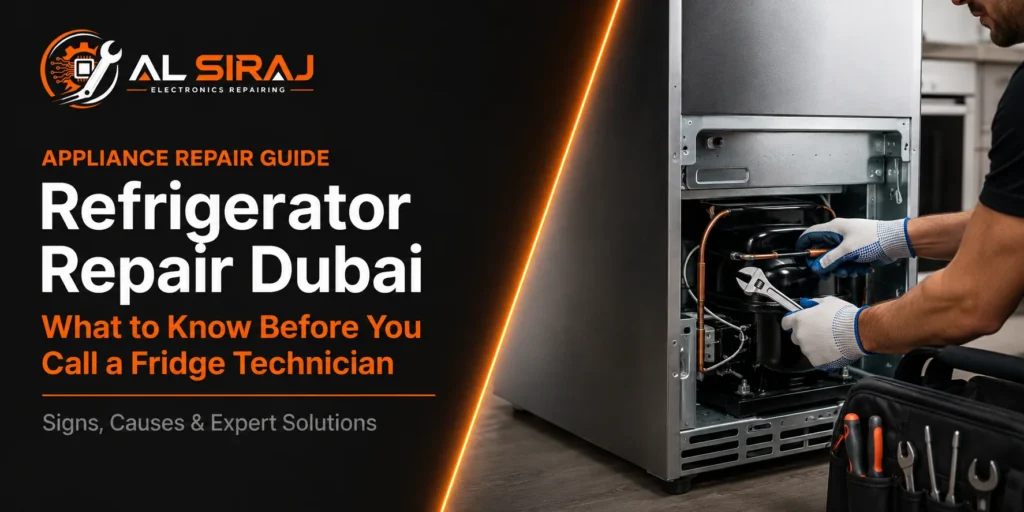
Every home and business in Dubai depends on a fridge that actually works. The moment it starts acting up the problem shows itself fast. Food spoils within hours because of the heat outside. A restaurant kitchen loses stock it cannot afford to lose. A family ends up throwing away groceries they just bought. None of this feels small when it is happening to you. Al Siraj Electronics Repairing has spent years fixing these exact problems across Dubai. We work on household fridges in apartments and villas as well as full commercial refrigerator repair projects for restaurants hotels supermarkets and offices. Our technicians check the actual issue first and explain the cost upfront so there are no surprises on the final bill. Every part that gets replaced is one of the fridge actually needed replacing. A fridge on its way to breaking down rarely stays quiet about it. Sometimes the compressor gets noisier than what a household is used to hearing. Food kept inside starts going bad sooner than expected. Frost builds up in a corner of the freezer that always used to stay clear. People notice these things and then forget about them a day later because nothing feels urgent yet. That is usually the mistake. A technician called in at this stage can often fix the fridge in one visit and for a lot less money. Wait too long and the same fridge might need a new compressor or a part that costs three times as much. What follows in this guide covers the problems fridges run into most often across Dubai homes and businesses and why they tend to happen in the first place. It also breaks down when a simple check at home is enough and when the job actually needs a trained fridge technician. There is a section on proper fridge maintenance that helps appliances last longer and a full list of the areas across Dubai our team covers. Anyone searching for a refrigerator repair near me should have most of their questions answered by the time they finish reading. Signs Your Fridge Needs Repair Food spoiling faster than usual. Milk gone sour in a day, veggies wilting way before they should. That’s usually the first hint something’s off with the cooling. Ice building up in the freezer. A thick frost layer where there never used to be one. Nine times out of ten it’s the defrost system, or a door that isn’t shutting all the way. Water pooling under the fridge. Almost always a blocked drain tube, though once in a while the culprit turns out to be an old seal giving way. Compressor sounding rougher lately. Every fridge hums a bit; nothing wrong with that. It’s when the sound changes or gets louder that a worn-out part is usually behind it. A faint smell near the back panel. Could be nothing. Could also be an early refrigerant leak, and those are much easier to deal with before they turn into a bigger mess. A gasket that has given up. The door stops sealing the way it should, warm air keeps getting in, and the compressor ends up running longer than it’s meant to just to compensate. Inside the fridge running warm. Hard to miss this one, and it’s a fairly reliable sign of a fridge not cooling the way it’s supposed to. Temperature going up and down. Cold one hour, not so cold the next. Usually points to a thermostat or sensor that’s stopped reading correctly. Fridge light not turning on. Could just be the bulb. Could also be a wiring issue somewhere behind it, worth having a look either way. Fridge gone completely silent. No hum, no motor, nothing. At this point the unit has likely stopped running altogether and needs a technician fairly soon. Most of these are manageable if someone calls in help while the problem is still small. Left alone for a few weeks, though, they tend to turn into bigger jobs than they needed to be. Also Read: Washing Machine Repair Dubai: What You Should Know Most Common Refrigerator Problems & Their Causes Fridge trouble usually comes down to the same handful of causes, over and over again. Getting the description right when calling a technician actually makes a difference, since a lot of these problems sound similar on the surface but need very different fixes. Cooling failure tops that list. In most cases it’s the compressor losing power, or refrigerant that’s dropped below what the system needs to work. Figuring out which one takes an actual inspection, not a guess based on sound or feel alone. Gas leakage is sneakier than most people expect. It rarely shows an obvious sign right away. What usually happens is the fridge just never quite hits the temperature it’s set to, no matter how many times the dial gets adjusted. Sealing the leak and doing a proper refrigerant refill is the only fix that actually lasts. Patching it temporarily just brings the same problem back in a few weeks. Water leakage tends to come from one of two places, a blocked drain tube or a seal that’s worn through after years of use. Either way water ends up somewhere it has no business being, and in a busy kitchen that’s not just annoying, someone could genuinely slip on it. Freezer not freezing, while the main fridge compartment stays cold, is a strange one to catch at first. Usually the thermostat’s off, or a fan has stopped moving air the way it should, or the defrost system is stuck somewhere in its cycle. Easy to overlook because everything else feels normal. Loud compressor noise generally means a part inside has worn down or come loose from where it’s supposed to sit. Not dangerous most of the time, but it’s a clear sign the compressor is working harder than it needs to, and that shortens how long it lasts overall. Door not sealing shut properly almost always comes back to a worn gasket.